Introduction: From Attendance Logs to Faculty Well‑Being
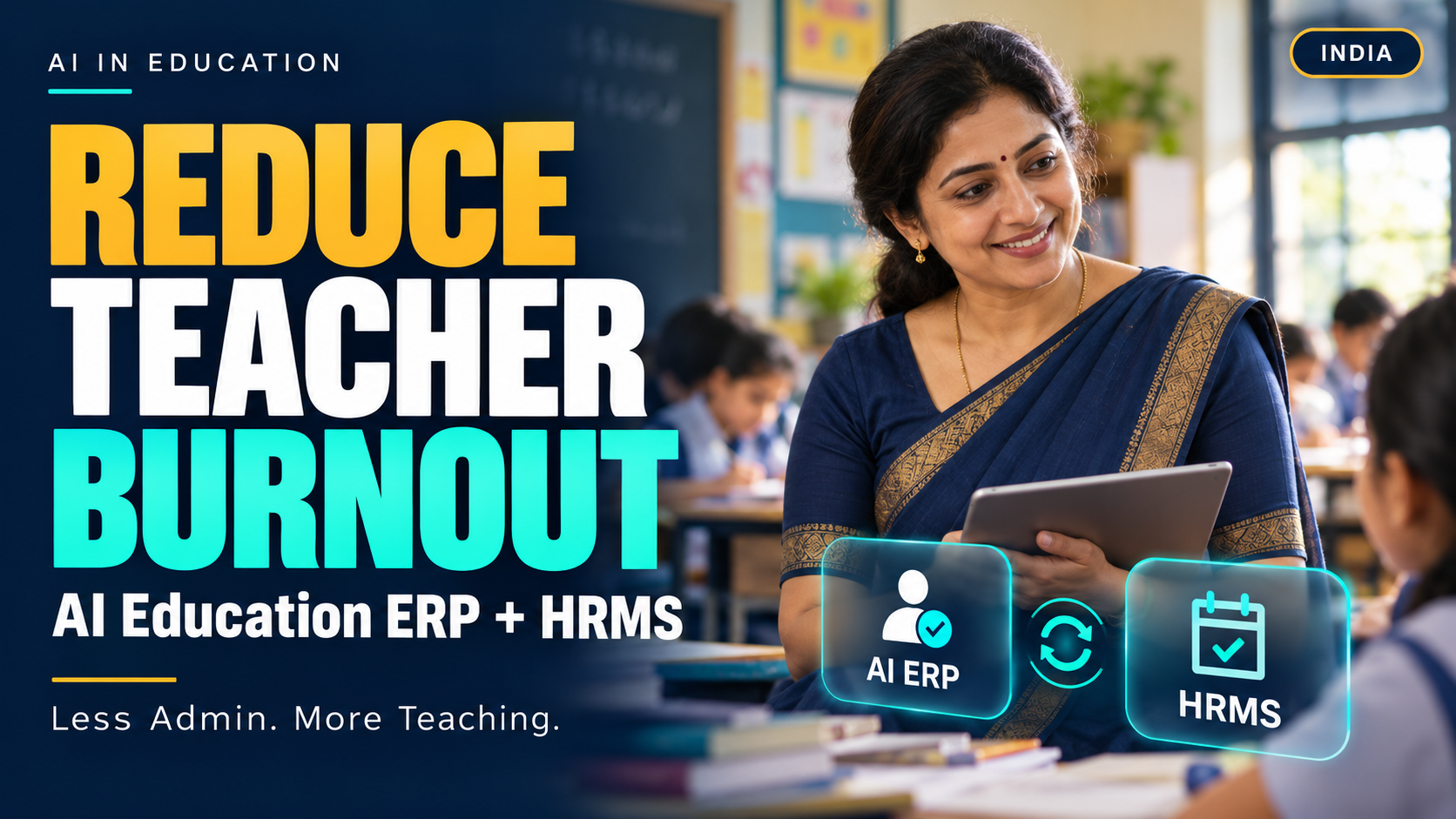
In 2026, the conversation in Tier‑1 and Tier‑2 private schools has shifted from attendance tracking to faculty sustainability. While traditional ERP modules still manage timetables, payroll, and fee collection, the next generation of AI Education ERP platforms is tackling the root cause of teacher attrition: burnout. For principals, academic heads, and HR directors, understanding how AI can turn operational data into actionable wellness insights is now a strategic imperative.
The Rising Tide of Faculty Burnout
Recent surveys by the National Institute of Educational Planning & Administration (NIEPA) indicate that 68% of teachers in private schools report chronic stress, and 42% consider leaving the profession within the next two years. The primary drivers are:
- Excessive manual administrative work (grading, attendance, report cards).
- Lack of real‑time visibility into workload distribution.
- Fragmented HR processes that delay leave approvals, professional‑development tracking, and performance feedback.
When these pain points are left unaddressed, schools face higher turnover costs, declining student outcomes, and a tarnished brand reputation.
Core AI Capabilities That Matter
Modern Education ERPs embed AI at three critical layers:
1. Predictive Workload Balancing
Machine‑learning algorithms analyze historic class sizes, assessment cycles, and extracurricular commitments to forecast each teacher’s weekly load. The system then suggests optimal timetable adjustments, ensuring no faculty member exceeds a predefined stress threshold (e.g., 45 teaching hours per week).
2. Intelligent Document Automation
Natural Language Processing (NLP) parses handwritten or scanned assessment sheets, converting them into structured digital grades with confidence scores above 95%. This reduces manual grading time by up to 70% for subjects with objective answers, freeing educators to focus on mentorship and curriculum design.
3. Sentiment‑Driven HR Alerts
By integrating with the HRMS, the ERP monitors employee‑self‑service portals, leave patterns, and internal chat sentiment (with GDPR‑compliant anonymisation). A sudden spike in sick‑leave requests or negative sentiment triggers an automated alert to the HR director, prompting early intervention.
Seamless HRMS Integration: The Backbone of Faculty Support
AI gains its full potency only when the ERP talks fluently with the school’s Human Resource Management System. Key integration points include:
- Unified Employee Profiles: A single source of truth for qualifications, certifications, and performance metrics.
- Automated Leave & Substitution Engine: When a teacher files a leave, the AI instantly identifies qualified substitutes, updates timetables, and notifies affected students.
- Continuous Professional Development (CPD) Recommendations: Based on workload trends and skill gaps, the system suggests targeted training modules, linking directly to the HRMS learning catalog.
These integrations eliminate duplicate data entry, reduce errors, and create a feedback loop where HR policies are continuously refined by real‑time operational data.
Real‑World ROI Metrics from Indian Institutions
EDUZENAI’s AI‑driven ERP has been piloted in five leading private schools across Delhi, Bengaluru, and Hyderabad. The quantitative outcomes after a 12‑month rollout are compelling:
“Administrative time per teacher dropped from 12 hours to 4 hours weekly, and our attrition rate fell from 15% to 6%.” – Dr. Ananya Mehta, Principal, Delhi International School
| Metric | Pre‑AI ERP | Post‑AI ERP (12 mo) |
|---|---|---|
| Average grading time per exam | 6 hrs | 1.8 hrs |
| Leave‑approval cycle | 48 hrs | 6 hrs |
| Teacher‑reported stress index (1‑10) | 7.8 | 4.3 |
| Annual turnover cost per teacher (₹) | ₹5,20,000 | ₹2,10,000 |
Beyond the hard numbers, qualitative feedback highlights improved morale, higher student engagement scores, and a stronger employer brand that attracts top talent from across the country.
Implementation Roadmap for Indian Private Schools
Adopting an AI‑enabled Education ERP is a multi‑phase journey. Below is a pragmatic 6‑step roadmap that aligns with the budgeting cycles of Tier‑1/Tier‑2 institutions:
- Stakeholder Alignment: Conduct workshops with principals, department heads, and HR leaders to define burnout KPIs (e.g., average weekly teaching hours, leave‑request latency).
- Data Hygiene Sprint: Consolidate legacy student, staff, and payroll data. Use EDUZENAI’s migration toolkit to cleanse and map records to the new schema.
- Pilot Module Launch: Deploy the predictive workload engine in one academic department. Measure impact on teacher hours and iterate.
- Full‑Scale HRMS Integration: Connect the ERP to the existing HRMS via RESTful APIs. Enable real‑time sync of leave, performance, and CPD data.
- Change Management & Training: Run role‑based training sessions. Provide a digital “assistant” chatbot for on‑the‑fly query resolution.
- Continuous Improvement Loop: Leverage the AI analytics dashboard to refine thresholds, add new predictive models (e.g., exam‑paper generation), and expand to student‑wellness modules.
Each phase should be accompanied by a KPIs dashboard that reports on faculty productivity, burnout scores, and financial ROI, ensuring senior leadership can make data‑driven decisions.
Future Trends Beyond 2026
While AI Education ERPs are already delivering measurable benefits, the next wave will introduce:
- Generative AI for Lesson Planning: Auto‑creation of differentiated lesson plans based on curriculum standards and class performance data.
- Emotion‑AI in Virtual Classrooms: Real‑time detection of student disengagement cues, allowing teachers to adapt pacing without extra effort.
- Blockchain‑Verified Credentialing: Secure, tamper‑proof records of teacher certifications that integrate directly with HRMS for instant compliance checks.
Institutions that embed these capabilities early will not only sustain faculty well‑being but also position themselves as innovation leaders in the Indian education ecosystem.
Conclusion: Turning Technology into a Faculty Retention Strategy
In 2026, the competitive advantage for private schools lies less in campus infrastructure and more in the intelligence of their back‑office systems. An AI‑driven Education ERP that unifies school automation with HRMS integration transforms attendance‑centric processes into a proactive faculty‑wellness engine. The result is higher productivity, lower turnover costs, and an environment where teachers can focus on what they do best—shaping the next generation.
For principals, academic heads, and HR directors ready to future‑proof their institutions, the question is no longer if AI should be adopted, but how quickly it can be integrated to stop burnout before it starts.